Building Regulation Changes 2025: What You Need to Know
Contact Us
The Department for Levelling-Up, Housing and Communities (DLUHC) has announced interim uplifts to Approved Documents L and F, alongside new specifications that include the introduction of the Approved Document O, which is a new regulation concerning overheating in residential properties. This is part of the government’s effort to enforce a 30% cut in carbon emissions for all new homes. The changes will be implemented in June 2022. There will be a one-year transition period to allow for planning applications underway at that time. The hope is that the changes will help us to achieve the 2025 Future Homes Standard, which will see new homes emit 75-80% less carbon than under present regulations.
But what are these new regulations? How will they affect London homeowners? Is your dream home improvement project now no longer viable? In this article, we hope to settle your concerns. We’ll be breaking down each of the regulation updates and explaining which home improvements can keep your home up to date.
First things first…
What are building regulations?
Building regulations are a set of government requirements that a new construction project must adhere to in order to go ahead. They are concerned strictly with the safety and structural integrity of the build. They are different from planning permission, which is concerned with appearance and is controlled by local council authorities. If a building or extension does not follow the building regulations, it is not allowed to be built.
What are the key building regulation changes coming in 2025?
In 2025, significant updates to building regulations are expected to enhance energy efficiency, safety, and sustainability in homes. These changes aim to reduce carbon emissions and promote the use of renewable energy sources. Homeowners may need to adapt to new requirements regarding insulation standards, ventilation systems, and the use of eco-friendly materials. Additionally, stricter guidelines for fire safety and accessibility will ensure that homes are not only comfortable but also safe for all occupants and residents. Understanding these upcoming regulations is crucial for homeowners and builders alike, as they will shape the future of housing construction and renovation.
Will the NHBC standards be affected by the 2025 building regulation changes?
The upcoming changes to building regulations in 2025 are expected to have significant implications for NHBC (National House Building Council) standards. As the UK government, particularly the Ministry of Housing, Communities & Local Government (MHCLG), aims to enhance energy efficiency and sustainability in new homes, NHBC standards may need to adapt to align with these regulations. According to the MHCLG, the new regulations will focus on reducing carbon emissions and improving the overall quality of housing. This could lead to stricter guidelines on insulation, ventilation, and the use of sustainable materials. Additionally, the NHBC may revise its warranty and insurance coverage to reflect these regulatory updates, ensuring that builders comply with the latest standards while also protecting homeowners. For further details, the full report can be accessed through the UK Government’s official website.
What is Approved Document O?
Approved Document O has been introduced to diminish the risks of overheating in residential areas. The new regulations will affect new homes, care homes, children’s homes, and student accommodation blocks. The regulations split the country into areas of ‘moderate’ and ‘high risk’. Some urban and suburban parts of London are included in the list of high-risk areas.
There are two key implications for homeowners to consider.
Minimising solar gain heat
The new regulations stress the importance of preventing overheating as a result of over-exposure to the sun. There are strategies in place for limiting solar gain in the Summer:
- Limiting the amount of glazing in one room
- Ensuring capacity for shading and other means of UV-ray absorption (these cannot include things that can be removed later, such as blinds and trees)
Restrictions to amounts of glazing could see a surge in popularity for orangeries and conservatories with tiled roofs, as these use less glazing than a typical all-glass conservatory. Any new glass conservatories that are installed will have to use extraordinarily energy-efficient glazing. Thankfully, at Unique Glazing, we only install glass conservatory roofs with A++ energy ratings.
Safety and usability
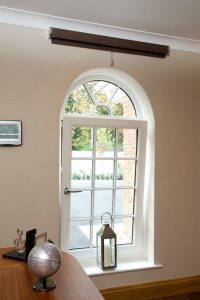
The government are concerned that windows with poor functionality will discourage homeowners from opening them. This will increase their risk of overheating. Therefore, all new windows must be safer, more secure, and easier to use. This level of quality can easily be achieved by any of our windows. Our tilt & turn windows, for example, are a great example of windows that combine functionality with style.
What are the changes to Approved Document L?
The updates to Approved Document L concern the ‘minimum fabric efficiency’ of new homes and home improvements. In other words, they are to do with the energy-efficiency of windows and doors. New windows and roof lights must now exhibit U-values of 1.4 W/m²K (energy rating B), down from 1.6 W/m²K (energy rating C). New doors must achieve U-values of 1.4 W/m²K, down from 1.8 W/m²K. Fire doors are being allowed to remain at 1.8 W/m²K.
What are U-values?
U-values measure the rate of thermal transmittance through a surface in the context of building work. The lower an object’s U-value, the less heat can pass through the object. Windows and doors with lower U-values are more energy-efficient, as they don’t allow as much heat to escape a property, thus minimising the need for central heating usage.
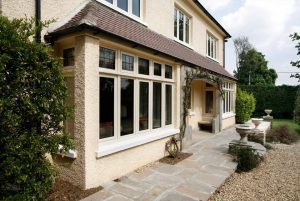
Thankfully, all our windows and doors already achieve energy ratings of A and above. So, these new regulations will not affect us or our customers in that respect.
Energy-efficient extensions
Also part of the Document L updates for residential buildings, extensions must adhere to higher standards of efficiency. This is to ensure that ‘direct electric heating systems are not used in unsuitable circumstances.’ This is a change with only positive benefits. It will surely put an end to sub-par conservatories which are too cold in Winter and require electric heaters to stay warm.
What are the changes to Approved Document F?
The updates to Approved Document F concern ventilation in residential homes, crucially under the principles of Approved Document B. Now, when work is done to improve energy efficiency, installers must not make the property’s ventilation worse in the process. It is recommended that replacement windows are fitted with background trickle ventilators. However, this is not mandatory. It is not required if doing so would not make the ventilation any better.
It is unlikely that these new regulations will have a noticeable impact on London homeowners. Again, any effects will only be positive, resulting in better ventilation for London homes.
Are there specific safety regime updates expected with the 2025 building regulation changes?
Yes, the 2025 building regulation changes are anticipated to introduce several significant updates aimed at enhancing safety in residential construction, including the requirements for staircases. These updates may include stricter fire safety standards, improved structural integrity requirements, and enhanced energy efficiency measures. Additionally, regulations regarding the use of sustainable materials and technologies are likely to be emphasized to promote environmentally friendly building practices. Homeowners and builders will need to stay informed about these changes to ensure compliance and enhance the safety and sustainability of new homes.
How do the 2025 changes to Part L influence energy efficiency requirements?
The upcoming modifications to Part L of the building regulations are set to significantly impact the energy efficiency standards for new homes. These changes aim to reduce carbon emissions and promote sustainable building practices. Local authorities will play a crucial role as homebuilders will need to implement enhanced insulation techniques, utilize energy-efficient heating systems, and consider renewable energy sources to meet the new standards. As a result, homeowners can expect lower energy bills and a reduced carbon footprint, contributing to a more sustainable future in the housing sector.
Quality windows, door and conservatory installer in London
If you live in or near London, and have more questions about the new building regulations, Unique Glazing are on hand to answer any questions. For more information on how this new legislation could affect you, please feel free to contact us.
Delivering Customer Satisfaction
We strive to provide the best service for our customers. Here are some reviews from our happy customers.
Read our reviews




Offering you the best possible prices
Get in touch today for a no-obligation quote, totally free!